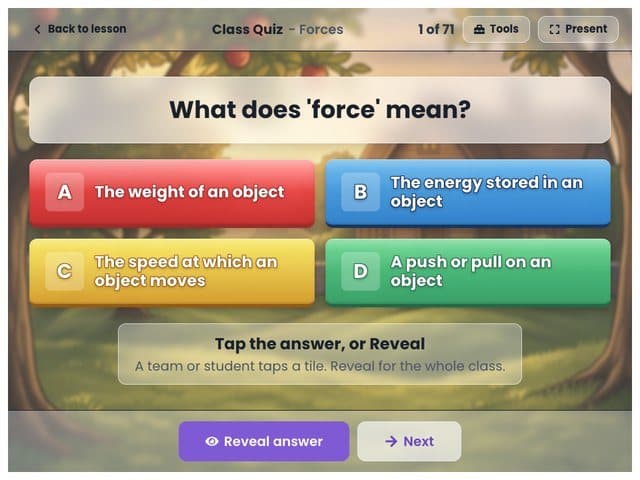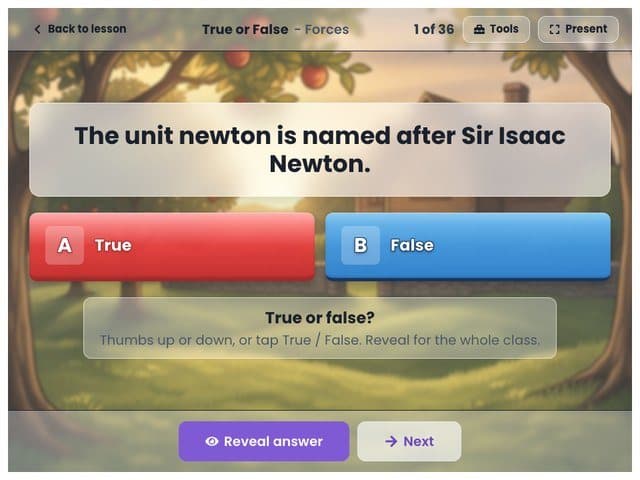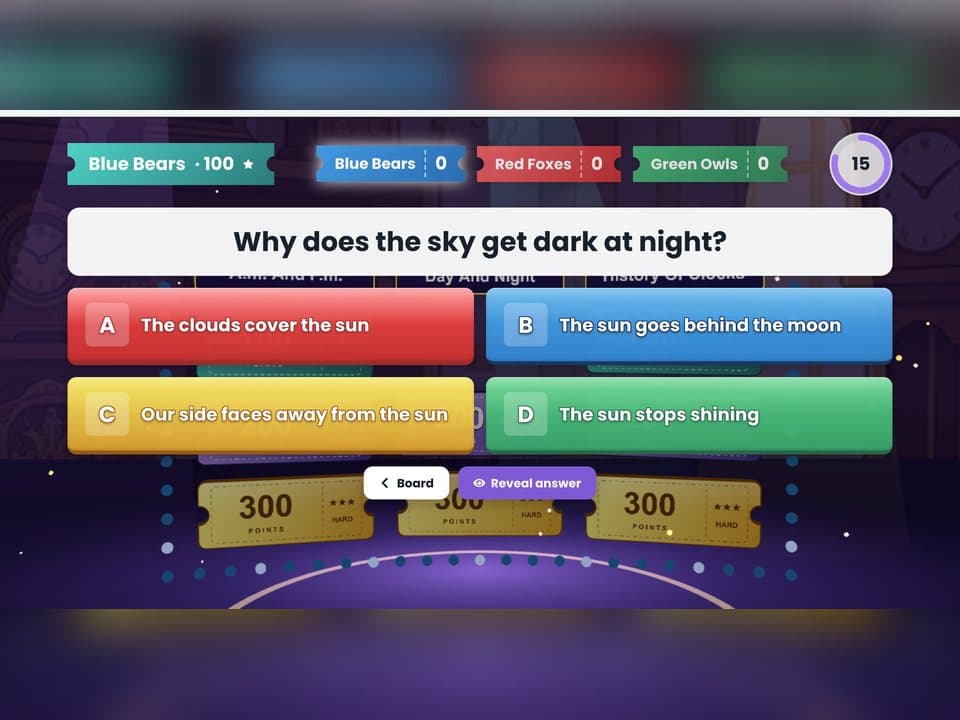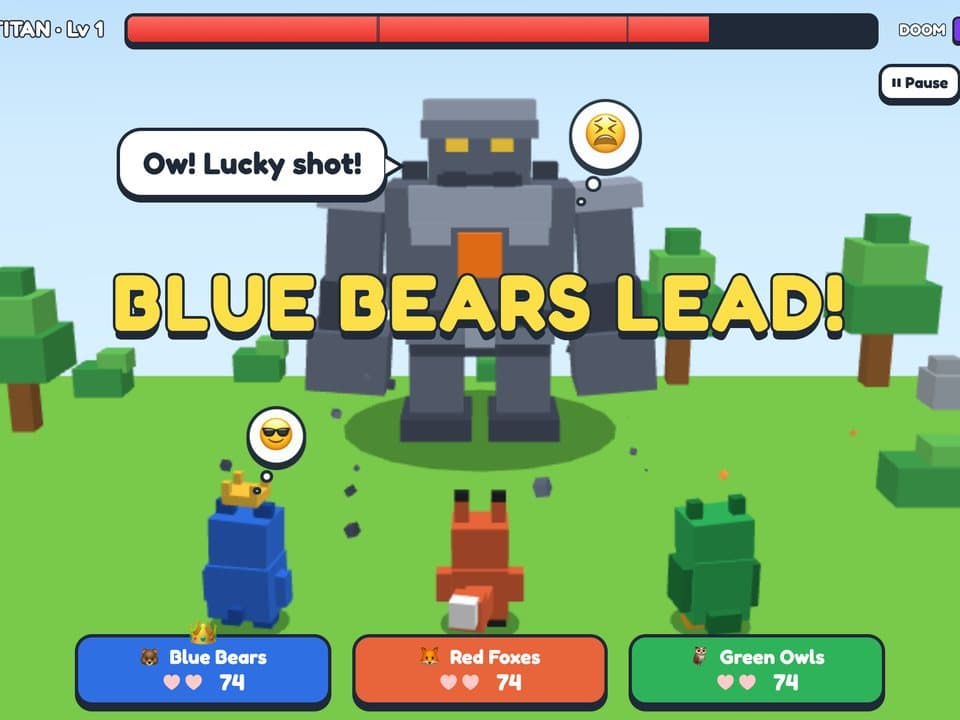
We are in early access.

Skippy the classroom companion

A teacher's extra pair of hands.

AI powers, without the endless prompting, reviewing, and fixing. Everything Downtime makes is built from the lesson you actually taught, so it reads as proof you did the work, multiplied.

Start free

See how it works

No card needed - your first 5 classes are free.

The point

What Downtime unlocks

The teaching you would do if you had the time. None of it adds to your workload.

Every Student Works At Their Level

A teacher slides a wall control and each desk gets a different sized stack of work

Differentiating for a whole class by hand is not realistic, so it mostly does not happen. Downtime does it: each student can get practice at their level, and you decide how far it pushes.

Higher-Order Thinking Questions

A lit bulb overhead as two cards are joined together by a chain link at a desk

Most auto-made questions just test memory. These make students reason: compare things, follow cause and effect, catch the mistake. That is the HOTS your exams ask for, and the hardest part to write yourself.

The Lesson Looks Like The Subject

A whole classroom turned into a coral reef, with fish and coral around the desks

Teach the ocean and the class is inside a reef. It is not for show. Being inside the subject is what makes it stick, and it stays that way the whole lesson.

No Prep, No Marking

A teacher rests with a mug at sunset while a pen fills in the pages by itself

All of it builds from your live lesson while you teach. Nothing to prepare tonight, nothing to grade at 11pm. Honestly, this is the part most teachers sign up for.

Launch A Game Mid-Lesson

A teacher pulls a glowing play button off the board and the class cheers in confetti

When the energy drops, start a game built from what you just taught. It works because it is their actual lesson, not a generic quiz.

It All Works On Paper Too

A teacher holds up a blank worksheet next to the filled-in copy, printer beside him

Every lesson also prints: a blank student copy and a teacher copy with the answers. For the room with no devices, or the day the wifi is down. Everyone still takes part.

The relief

What you don't have to do

The AI babysitting other tools quietly hand back to you: the prompting, the fixing, the endless reviewing. With Downtime, you do none of it.

No Prompting

No prompt engineering, no rewording the same request five times to get something usable. You teach the lesson. That is the whole input.

No Hallucinations

AI will confidently make things up, and a made-up fact has no place in a classroom. Downtime builds only from what you actually taught, so there is nothing to fact-check.

No Uploading Files

No PDF, no slides, no spreadsheet, no document to export and upload first. You teach the lesson and it is already there.

No Reviewing Every Question

Making questions is easy now. Checking that all forty are correct and actually fit your class is the part that still eats your evening. These come straight from your lesson, so there is nothing to sit and audit.

No Changing How You Teach

No new method to learn, no script to follow. Teach exactly the way you do now. It works around your lesson, not the other way round.

No Accounts To Set Up

No student logins to create, reset, or chase. Students join with a first name and a link. Nothing to manage, and nothing about them is stored.

All it asks of you is the lesson you were already going to give.

Press one thing. Teach like always. The rest fills in as you go.

1

Press Start

Skippy listening quietly in the background

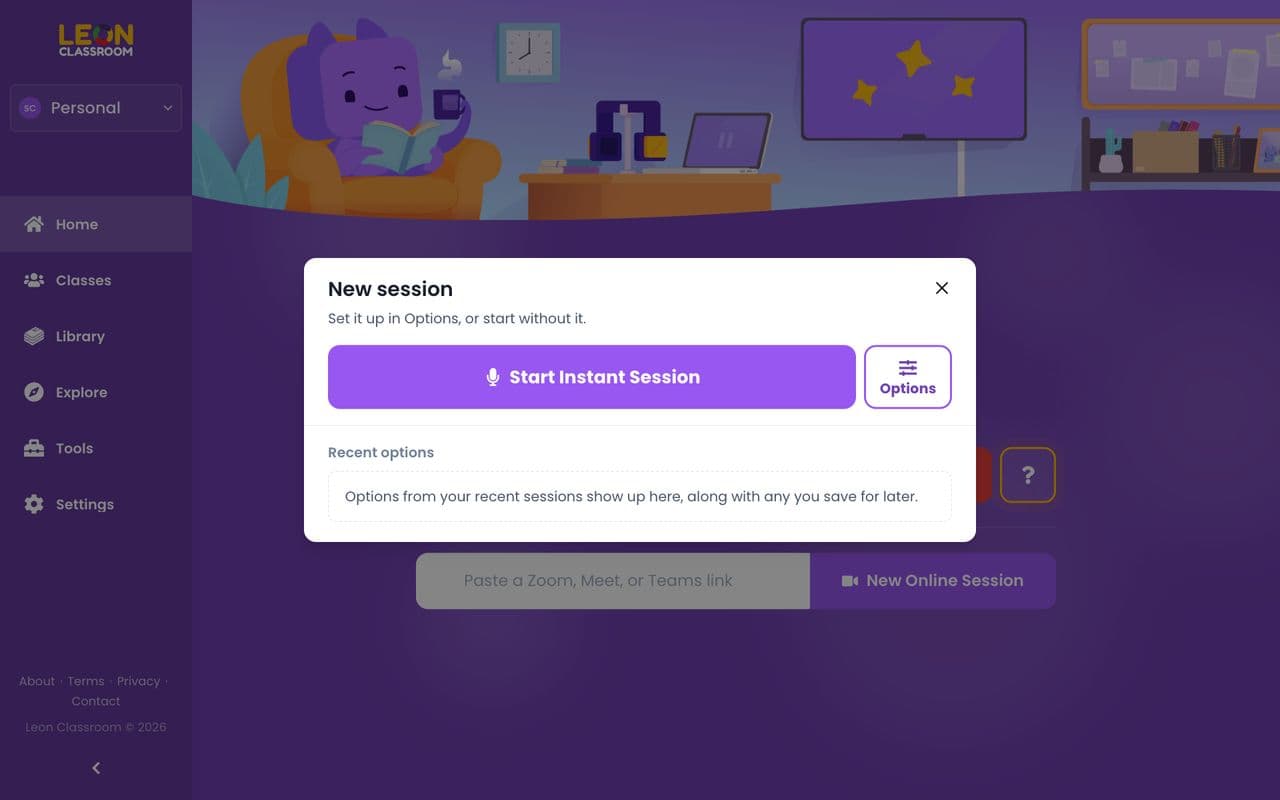
In the room, or paste your Zoom, Meet, or Teams link if class is online. Then the phone goes in your pocket - from here it's just a microphone.

2

Teach As Usual

Skippy building from what you say

Skippy listens and works only from what you actually say, never a pre-made list. Nothing for students to install, nothing to sign in to.

3

It Builds Live

The room becoming the subject, live

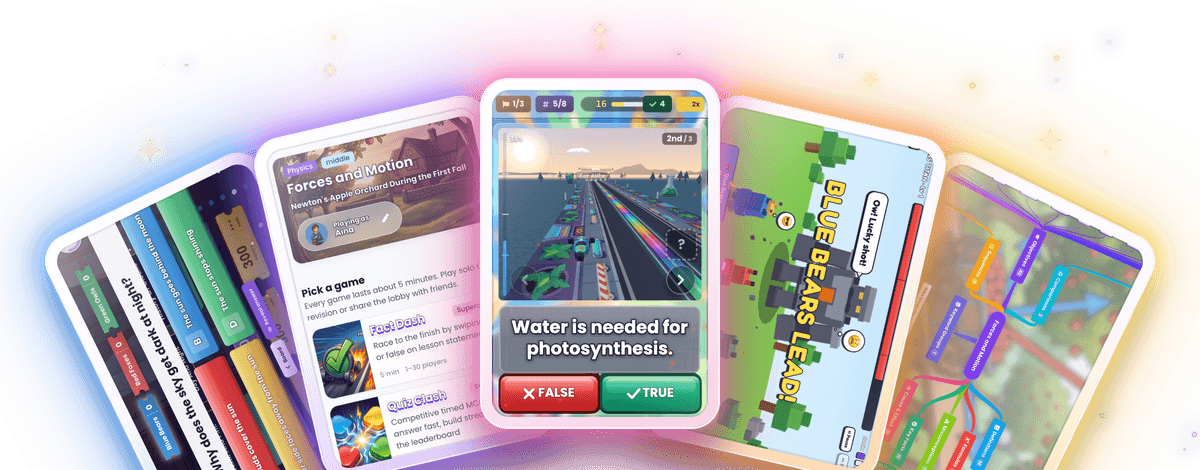
While you talk, the room turns into your subject. Notes, a mind map, practice, and games all build with it. Launch any of them mid-lesson - yours to keep after the lesson.

It really is that simple.

Try it free
The fork in the road

Choose, or be displaced.

Schools are going to adopt AI tools. That part is settled. What is not settled is what those tools do to the teacher.

It replaces you

The tool takes over the lesson. Students stare at an app all day. You get demoted to a ‘guide’ who keeps the room quiet while the software does the teaching.

It empowers you

The tool builds around your lesson, not instead of it. Students get pulled into the subject, not into a screen. You teach, and your name is on all of it.

We built Downtime for the second one. This is where teaching is going. Make the right choice.

Start free

First 5 classes free. No card.

This is not fear-mongering. It is already underway, and from what we see up close, it only grows if teachers let it.

No learning curve

It'll feel oddly familiar.

You used folders and a web browser to get here. That is all it takes - everything works the way you already expect, it just does far more.

Screenshot

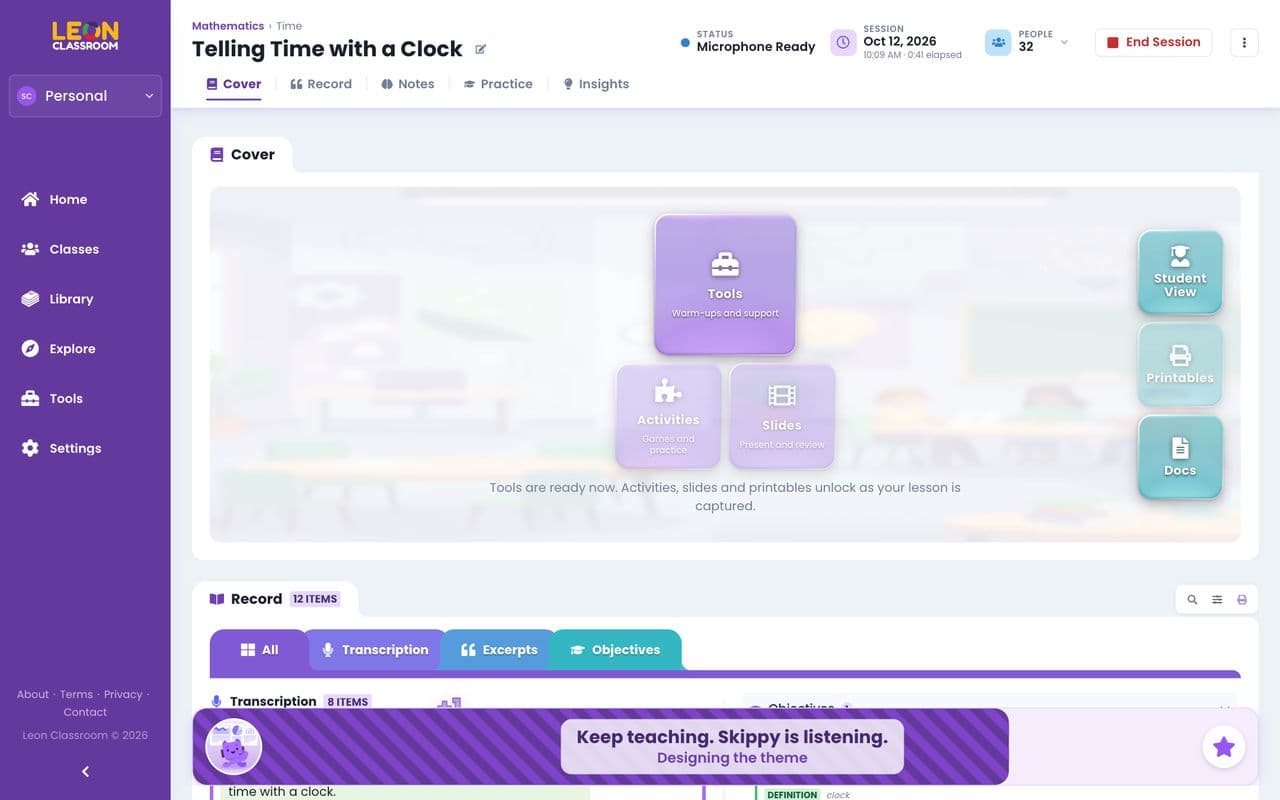
The session page - folder tabs across the top, one click to notes, games, printables, or tools.

Tabs, Like Your Folders

Everything sits behind tabs - the same folders you already use, only smarter.

Screenshot

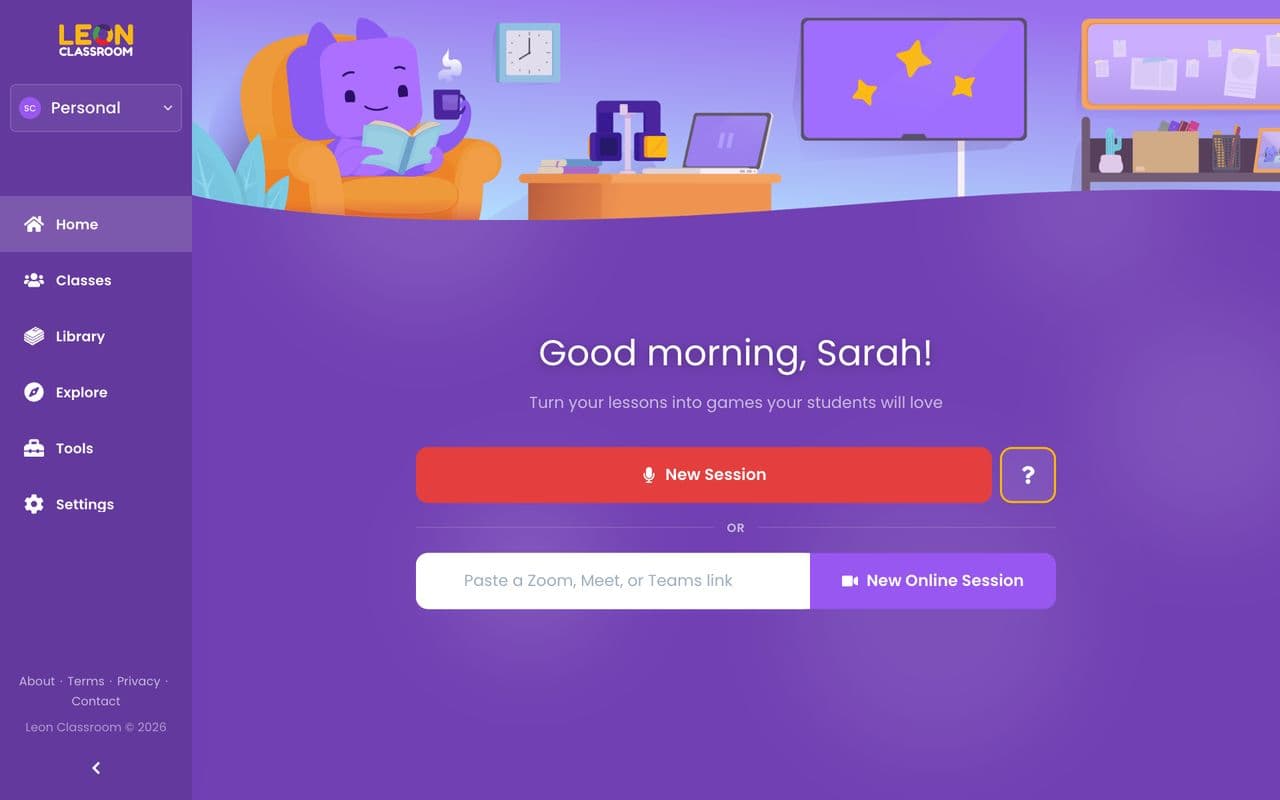
A clean home screen - your classes and materials, with nothing cluttered.

A Dashboard Kept Simple

One clear screen. What you need is where you would expect it, nothing buried.

Just Right

Not so simplified it frustrates you, not so complicated you cannot find what you need. Feels like Goldilocks.

It Is Only A Web Page

No app to install, for you or your students. If you can open a browser, you can run the whole thing.

Works On Any Screen

Phone, tablet, or laptop - the same for you and your students.

The most beautiful, easy-to-use, and fun ed-tech app you have ever had to deal with. (Probably.)

Immersion

It doesn't look like an app. It looks like the subject.

Every lesson turns into its own world, with art drawn fresh for that class - so students feel like they are inside the subject, which is what makes it stick.

Each world is a full set - a background, a dozen characters, vehicles, cards, tower blocks, and props, every piece unique to the lesson.

Built While You Teach

A teacher talks and a small world builds itself in the air from puzzle pieces and note slips

Live, from what you actually say, and it costs you nothing to make.

Yours To Keep After Class

A student at a desk beside an open door, a path leading out into the world of the lesson

Students step back into the same world's games and practice at home, in their free time.

Fits The Age You Teach

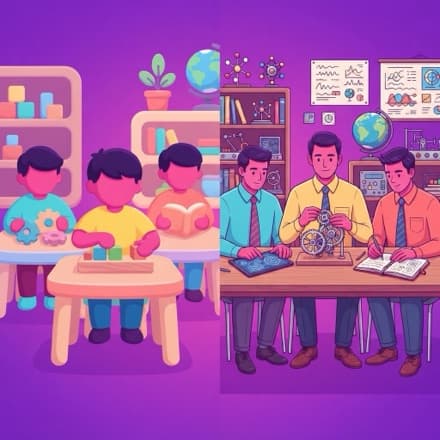
Young students with blocks on one side, older students with a gear model and charts on the other

Playful and simple for the youngest, more grown-up for senior classes.

Classroom-Safe By Default

Two cupped hands sheltering a few costumed characters under an umbrella

Modest, respectful on sensitive topics, and famous characters turned into look-alikes.

Every student works at their own level.

The room stays one class. Underneath, each student can get the work that fits them - always your choice, never automatic.

Their Level, Your Choice

A teacher works a press that stamps the same pattern onto cards, simple on one and detailed on the next

The same set for the whole class, a mix, or a version for each student. Points or not. You decide. What used to mean a lot of extra prep is now one toggle.

A Map For Each Student

Four small chart panels float around a teacher, each marking a different strength or gap

For each student, it builds a map of what they know well and what they are still missing - so you can see where everyone is, any time.

A Clear View Of The Whole Room

A teacher watches a wall screen of student tiles, each with its own progress ring

You see what the class understood and what they missed. The games the class plays mark themselves. Yours to read - never a label on a student, never a push to act. You're the teacher.

Notes

Notes, sorted the way you would sort them.

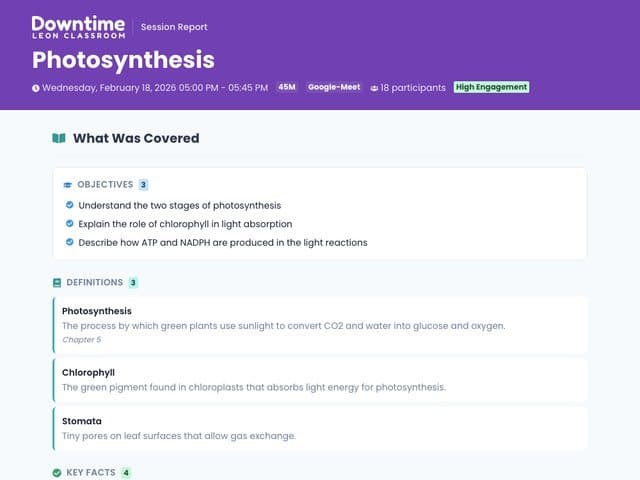
As you teach, your words are filed into clear sections like objectives, key facts, and common mistakes - so you and your students can jump straight to the part you need, instead of scrolling one long wall of text.

Notes - Photosynthesis

Real screenshot

The notes page, with each type in its own labelled section instead of one long list.

Objectives

What the lesson aimed to teach.

Key facts

The points worth remembering.

Definitions

Every term, explained simply.

Sequences

Steps and processes, in order.

Cause and effect

What leads to what, and why.

Comparisons

How two things are alike and different.

Formulas

Kept in their proper form.

Common mistakes

The errors students often make.

Study aids

Not just notes. A whole set of study aids.

The same lesson also becomes a map, labelled diagrams, side-by-side comparisons, practice sets, and a searchable record - so every student has a way to revise that suits them, and you did not build any of it.

Screenshot

The lesson as one map - the topic in the middle, ideas branching off, ready to pan and zoom.

A Big Picture Map

The whole lesson as one map you can pan, zoom, and click - or switch to a plain list.

Screenshot

A labelled diagram of a sequence or a cycle, drawn from what you taught.

Labelled Diagrams

Sequences, cycles, and cause and effect drawn as pictures, not just written.

Screenshot

Two things side by side, with what each one has and what they share.

Side-By-Side Comparisons

When your lesson weighs two things against each other, they are laid out side by side so the differences stand out.

Practice Sets

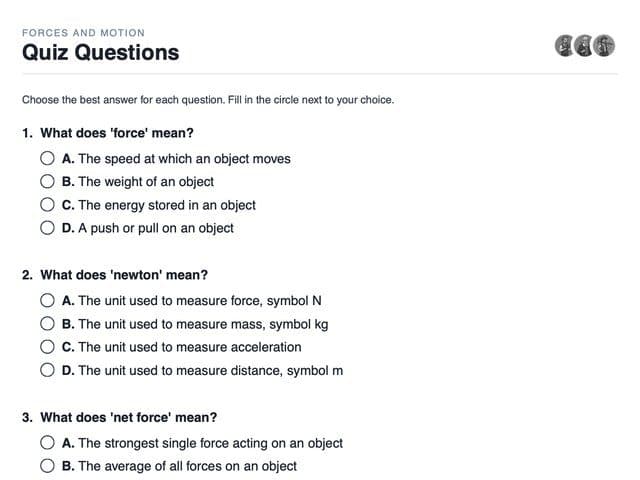
Questions, fill-in-the-blanks, true-or-false, put-in-order, and more.

A Searchable Lesson Record

The transcript, your important quotes, and the lesson objectives - all searchable.

The three modes

Not just games. Three modes, from warm-up to check-in.

You pick what the room needs - each mode built for one job, not one game stretched across all of them.

Tools

A teacher reaching into a tool belt holding a spinner wheel, a timer, and a meter

Run the room.

A 21-piece belt - timers, name pickers, group makers, noise meters, and more. Reach for any of them at any point in class, for any reason.

Games

A teacher and student cheer as a lightning bolt hits a race track running to the finish flag

Energize the room.

Built from your lesson, with real mechanics - power-ups, sabotages, upgrades, racing, cards. Start one when the energy dips and it gets the class focused again.

Activities

A teacher holds a magnifying glass over a marked answer sheet while a student watches

See what they remember.

Content, not mechanics. Plain practice that shows you what they learned and what they missed - the assessment side, without turning it into a game.

Compared to the usual tools

Other tools

Downtime

Prep time

20-60 min

None

When to use it

End of class

Mid-lesson, whenever

Who runs it

You do

Runs itself

Where it comes from

A pre-made bank

What you just taught

As you reuse it

Gets repetitive

Adds what you just taught

The toolkit

Useful tools at your fingertips.

The little things that keep a class moving - timing, picking names, grouping, keeping the noise down - all in one place, so you never stop to open another app. And because they follow your live lesson, each one already fits what you are teaching.

Timers For Any Activity

A teacher sets a big clock and a stopwatch on the desk while students work

Timers, a stopwatch, and countdowns keep any activity on time - a quick warm-up or a full test.

Pick Fairly

A spinner wheel, a dice, and a raffle drum on a table with the class gathered round

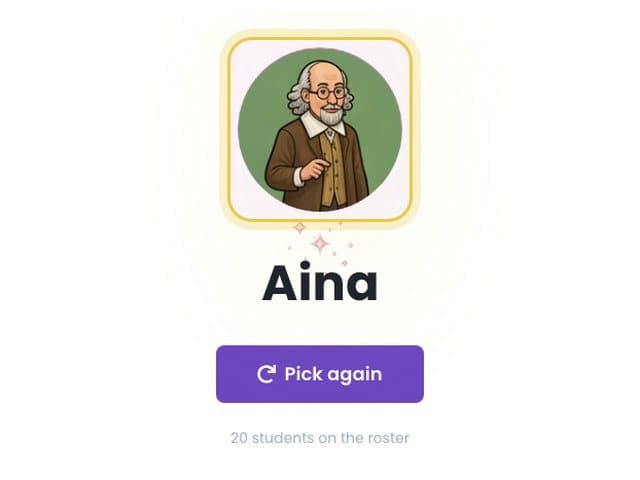
A random name picker chooses who answers, so the choice feels fair to everyone.

Group In Seconds

A teacher points at a board splitting the class into groups, students already in clusters

Team and group makers split the class any way you need, right away.

Keep The Noise Down

A noise meter and a green traffic light on the wall while students work at their table

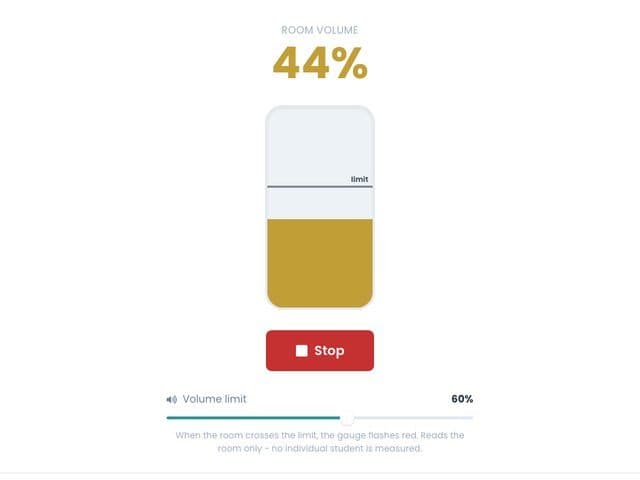
A noise meter and a voice level setting hold the volume during group work, no shouting.

Reward Good Answers

A teacher and student throw their arms up as confetti bursts out of a box

The react board plays a sound and fires confetti the second a student gets it right.

Little Extras, Handled

A teacher sits at a clear desk while papers and a checklist sort themselves onto the shelves

A calculator, unit converter, and scratchpad cover the small jobs, so you stay with the class.

The full belt

21 tools
Name Picker
Group / Team Maker
Random Order
Countdown Timer
Stopwatch
Voice Level
Cold-Call Deck
Show of Hands
Live Q&A
Objective Banner
Announcement
Reference Board
Recap Slide
Noise Meter
React Board
Brain Break
Breathe
Calculator
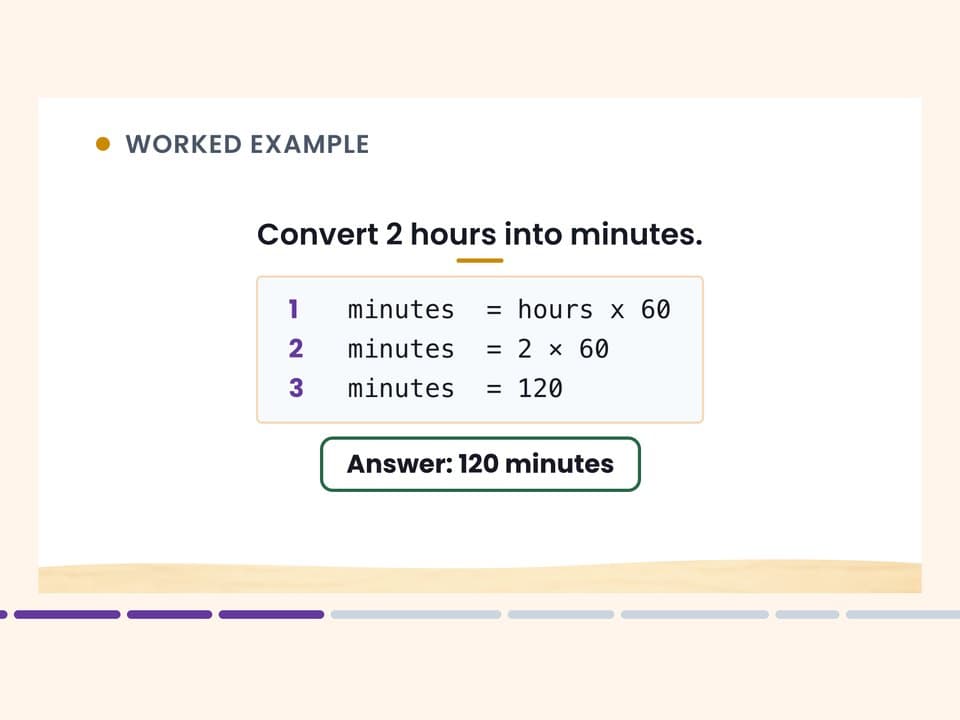
Unit Converter
Scratchpad
Notes
Multilingual

Teach in your language, or a mix of both.

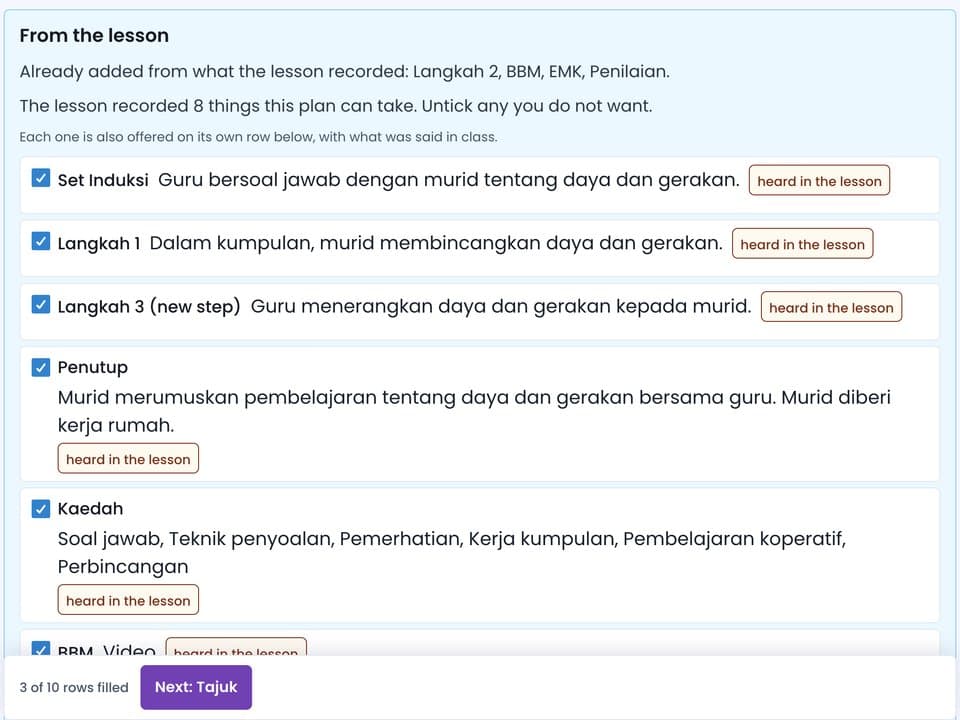
Notes, questions, and read-aloud all come out in the language you taught - Bahasa Malaysia, English, or a mix - so the tool is never the reason a student cannot follow along.

Practice - Photosynthesis

Real screenshot

The same practice question shown in your lesson's language, with a tap-to-read-aloud button and the language it is set to.

It Follows Your Lesson

A teacher speaks and a ribbon of words turns into neat note cards beside him

Notes, answer options, and definitions come out in the language you taught. Subject terms and formulas stay the same.

Made For Multilingual Classes

Two coloured ribbons twist into one strand above an open book as a teacher and students talk

Switch between Bahasa Malaysia and English mid-sentence - the rojak most classrooms actually speak. The finished materials still come out in one clear language.

Pin It, Or Let It Detect

A teacher taps a toggle on a tablet to set the language before class

Set the language at the start, or leave it blank and it picks up the language from the words you use.

Read Aloud In A Matching Voice

A tablet plays a question out loud, sound waves rippling from a finger on the screen

Students tap to hear a question in a voice that fits the language, Malay included.

Printables

Every lesson, ready to print.

One click turns the class into a booklet - a Student Copy to hand out and a Teacher Copy with the answers already filled in - so you have a worksheet and its answer key in seconds, even on the days screens are not an option.

Printable booklet

Real screenshot

The Student Copy and Teacher Copy side by side - blank answer lines for students, answers filled in and an answer-key badge for you, with themed cover art from the lesson.

Student Copy And Teacher Copy

A student holds a blank sheet while the teacher holds the matching copy with the answer key badge

One click makes both - blanks for students, answers filled in for you, with an answer-key badge on the teacher pages.

Choose What Goes In

A teacher ticks boxes on a standing checklist to pick what goes in the booklet

Practice, notes, and extras, each with a count. Tick what you want in the booklet.

Paper That Links Back Online

A QR code on a printed page opening the same lesson on a tablet

Each page can show a QR code to the online version, the class space, a game, the notes, or the map.

Mind Map And Label-The-Diagram

Two teachers look over a printed bubble map and a diagram sheet with blank labels

A one-page map of the lesson, plus diagram sheets with blank labels for students and answers for you.

Colouring Pages And One Art Sheet

Two colouring pages with a crayon, next to one sheet packed with every drawing from the lesson

Clean colouring pages for young learners, and one sheet of all the art drawn for the lesson - every character, scene, and prop.

For A Class With No Devices

A teacher hands printed sheets around the table and every student joins in, no screens

The whole lesson on paper for a no-device room or a no-wifi day. Everyone still takes part.

After class

See how the class actually went.

The moment class ends, you get a clear summary of the lesson - who understood, what the room missed, and the reports already written for you.

Lesson report

Real screenshot

The after-class report - how much of the class understood, a concept-by-concept breakdown, and the ready-made parent and leadership reports.

A Profile Of Each Student

One student beside a floating panel of bars and progress rings for what they know

For every student, it builds a map of what they know well and what they do not. Numbers for you to read, never a judgment.

It Updates Live

A teacher points at a wall screen where bars and a live pulse line move during class

The class summary updates mid-lesson, so you can revisit anything before class ends.

What The Class Got Stuck On

An open notebook with one line highlighted and pinned, a teacher looking on from behind

It notes where the class got confused, what you re-explained, and the questions students asked.

Quality and control

Every question, checked - and yours to change.

Quiet checks run on every one, and each item is tagged with where it came from and how hard it is - so you can trust it, review it, and add to it.

Turn On Fact Check

A teacher flicks a switch and a panel lights up with a magnifier and a warning triangle

Switch it on and it checks your lesson and marks likely mistakes - a wrong date, number, or name - as review cards to accept or dismiss.

No Unfair Questions

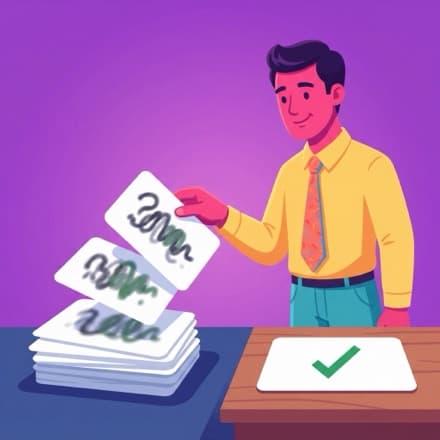
A teacher lifts scribbled question cards off the pile, leaving a clean one with a green tick

It removes options that could also be right, checks the true-or-false ones, and removes fill-in questions with more than one right answer.

Only What You Taught

A teacher speaks and the words land on a card inside a target while stray squiggles drift off

It builds from what you actually said, ignores the jokes and side comments, and never invents facts.

See Where Each Item Came From

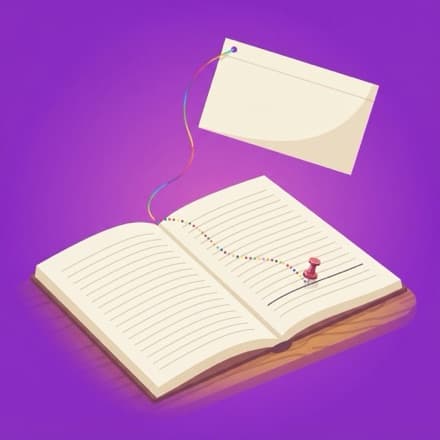
A thread runs from a pinned line in an open book up to the card it came from

Every question links to the point in your lesson it came from, so nothing is a mystery.

Tagged By Difficulty

A teacher looks over cards lined up short to tall, each marked with a green, yellow, or red dot

Each item is labelled easy to hard, so you can see the mix quickly and adjust it.

Add To Any Set, Anytime

A teacher presses a glowing button and fresh cards slide out to join the row

Reword a set into new versions whenever you want more, without starting over.

Ignores Off-Topic Chatter

A shield turning away scribbles and stray arrows, the stack of papers behind it untouched

It filters out off-topic chatter and trick words from the room, so they do not shape the materials it makes or the questions it asks.

It just works

Built to just work.

You teach. Downtime quietly handles the things that used to go wrong - and plenty more you will never notice.

It Fixes Its Own Mistakes

Loose jigsaw pieces dropping back into place on a board while the gears beside it turn

If a game or a graphic comes out wrong, it rebuilds it right away. You get the working version, not the broken one.

Playable Even Early In Class

A teacher and student press the glowing start button on a table screen of game tiles

Launch a game before you have covered much and it fills the gaps, so there is always something to run.

Sixty Students, Handled

A big class split into separate seated circles, each group working on its own round

For a live game, it splits a big class into separate game rooms on its own, so everyone gets a turn.

Your Old Lessons Never Change

A teacher reads from a folder while the older files sit safe under a glass dome

When Downtime improves, the sessions you already made are never rebuilt, changed, or charged for again.

Who it is for

Good for the whole classroom, and the whole school.

One tool that works for the people in the room and the people responsible for them.

For Students

A student leans in as a small village rises out of the tablet screen

Class feels like the subject, not a slideshow.

Inside the world of the lesson, not on slides

Work at a level that fits them

In the language you teach in

Open it again at home, free

For Teachers

A teacher leans back with a coffee as a pen fills in the stack of papers on its own

No prep, no marking, no late nights.

Teach the way you always do

The notes and games build themselves

It marks the work for you

Your name is on all of it

For School Leaders

A school leader on a balcony looking over a cutaway of classrooms, tablet in hand

True transparency into every class - the insight to steer teaching forward.

See into every class session, not just the results

Spot what is working across the school

Turn it into strategic academic decisions

Parent and leadership reports, written for you

No student ever came to class for an app. They came for you.

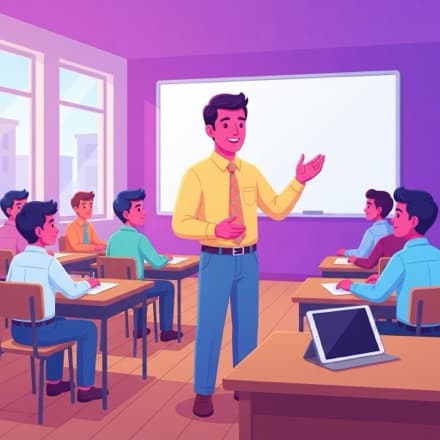
A teacher speaks at the front of the class while a tablet sits quietly on a side desk

Skippy never takes the front of the room.

It lives on a screen, not at the whiteboard. It listens while you teach and builds the materials around your lesson. It never runs the class. You do.

A teacher writes the lesson plan by hand in an open notebook at their own desk

It does not plan your lesson or decide how you teach.

It works from the lesson you give. It does not write the plan or run the room. The teaching stays yours.

A teacher sits back with a warm drink in the evening, the pile of marking left alone

All it gives you back is your time and your evenings.

Those evenings you were about to lose to worksheets? That is the downtime we are named for.

Pricing

One plan. Everything included.

No tiers to compare, nothing held back. Your first 5 classes are free - no card needed.

For every teacher

First 5 classes free

RM 69.90

/month

No card to start. Cancel anytime.

Unlimited classes, all year round

Every material and mode - notes, maps, diagrams, printables, games, and activities

Up to 60 students in a class

In any language you teach in

Everything you make stays yours to keep

Priority support and the teacher community

Start free - your first 5 classes

Running a school or centre?

Custom plans with admin tools, reporting, and centre-branded rooms for your team.

Contact us

Get your evenings back and keep hold of your sanity. We think that is a good deal.

Questions, answered plainly.

The things teachers actually ask before their first class.

The questions before your first class

Don't. Keep Kahoot for Friday fun. This is not a quiz game. It is what happens to the lesson the other four days: the room becomes the subject, your lesson turns into notes and practice, and the questions quote what you said in the room minutes ago. Built while you teach, not the night before.

The opposite. You teach exactly as you do now. Skippy's only job is to turn what you said into the class's materials. It never plans the lesson and never tells you how to teach. Your name is on the cover, not ours.

Keep them. They do a different job. A bank was written for a generic class before your lesson existed. Skippy writes from the lesson you just taught, in the words this class actually heard.

You don't need one per student. One screen up front runs the room. Every lesson also comes out on paper - a Student Copy and a Teacher Copy. Or skip the phones entirely and play the whole class on the projector or whiteboard. Everyone still plays.

Only your device needs a connection, not a whole room of them. On a day with no wifi, the same lesson still goes home on paper.

Skippy listens while you teach and builds the materials from what you actually say in the room. Never a bank someone made before your class existed. Live, while you talk.

No catch. Your first 5 classes are free, no card. After that it is one simple monthly plan. Nothing you have already made gets locked away, and the students' side is always free.

Students and devices

When you launch a game, a join link pops up for the class. They click it, type a first name, and they are in. No app to download, no account to make, no login. Nothing to install and nothing to remember.

Anything with a web browser and a connection - phones, tablets, laptops, Chromebooks. Nothing to install. Most students just use their own phone. And if a student has none, the whole class plays on one screen up front.

Up to 60. For a bigger class, Skippy splits them across several game rooms so everyone gets more turns and the games stay fun and fair.

Yes to both. A student can join a game already running, and if one drops - lost signal, phone locked - they rejoin and continue right where they were. Reconnecting handles itself.

No. They play on their own devices. Share your screen if you want the room watching a shared leaderboard or the game up front, but you don't have to.

Neither, it works for both. In the room, press start and teach. Online, paste your Zoom, Meet, or Teams link and Skippy listens through the call. Same result either way.

How it works and what it makes

Other tools turn the quiz into a game. Skippy puts you inside the subject - the room becomes the reef, the Colosseum, whatever you are teaching. A library serves everyone's lesson. This serves yours: the whole set is built from the lesson you are teaching right now, not pulled from a bank made before your class existed.

Notes of what you covered. A mind map of the lesson. Practice - questions, fill-in-the-blanks, true-or-false. A printable booklet to send home, as a Student Copy and a Teacher Copy. Activities and live games. All of it built from what you actually said in the room, while you were saying it.

Yes. Science, Maths, English, History, Geography, whatever you teach, in whatever order. No subject limits. Skippy builds from what you say, so if you can teach it, it can build from it.

Yes. Teach the ocean and the room becomes a coral reef. Teach Rome and it becomes the Colosseum. The world is themed to the exact lesson, so students are inside the subject instead of just watching a slide. Built live, while you teach.

You pick - 3, 5, 7, or 10 minutes, 5 by default. It fits the rounds and questions to the length you chose. Short for a warm-up, longer when you want to see who really knows it.

Yes, as many as you want in one session. Each new one uses only what you covered since the last, so it stays fresh and never repeats a question.

It builds from whatever you have covered so far. If very little has been covered yet, backup material keeps the game playable and on-topic.

From lower primary through upper secondary and beyond. You set the age group when you start, and the difficulty, pacing, and visual style follow it.

Recording and privacy

No. Skippy listens to build the materials, not to keep your students. They never sign in, never make an account - they join a link with a first name only, and session data expires. There is no student profile sitting on a server anywhere. It is built this way on purpose, which keeps PDPA simple.

They never make an account and never log in. They join with a link, first name only, and session data expires. No password to leak because there is no account to create. That is a design decision, not a setting you have to find.

A few, and here is the whole list. One keeps you signed in. One counts visitors without recording who they are. If you arrived from one of our adverts, two more record which advert it was, so we can tell which ones actually bring teachers in. We do not sell your data, and no third-party advertising network sets cookies on this site. Our analytics - Plausible - sets none of its own. Full details are in our Privacy Policy.

Yes. Access, correct, or delete your personal data whenever you want. Email support@leonclassroom.com and we will handle it.

Language, price, and plans

Yes. Teach in Bahasa Malaysia and the notes, instructions, and read-aloud come back in Bahasa Malaysia, in a Malay voice. It follows your lesson, not the other way round. Not an English tool with a translate button added on.

Your first 5 classes are free, nothing held back, no card. After that, a subscription lets you turn new classes into materials. Everything you have already made - booklets, worlds, notes - stays yours to open forever, and the students' side is always free.

You will be asked to subscribe to keep turning new classes into materials. Everything you already made stays yours - you just cannot start a new class until you subscribe. Nothing you built gets taken away.

Yes, whenever you like. It takes effect at the end of the current billing period, so you keep access until then. No extra steps.

Card, processed securely through Stripe, plus local options like FPX and e-wallet where they are available.

Yes. Put several teachers on one bill, with center-branded rooms, printables, and student hubs. Contact us and we will build a plan that fits your center.

You became a teacher for the Aha! moments.

Not for the worksheets. Not for the grading at 11pm. Skippy takes the making and the grunt work, so you get back the part of teaching that made you want to teach.

Start free

First 5 classes free. No card.

Follow us

Contact

support@leonclassroom.com

Downtime by Leon ClassroomSkippy at desk

© Copyright 2026 Leon Classroom Sdn Bhd All Rights Reserved